
The Questions You Can’t Answer Are the Ones Worth Keeping
Hosting a visiting surgeon from Christchurch for a day of robotic shoulder replacement — and what the conversation beside the table teaches both sides.
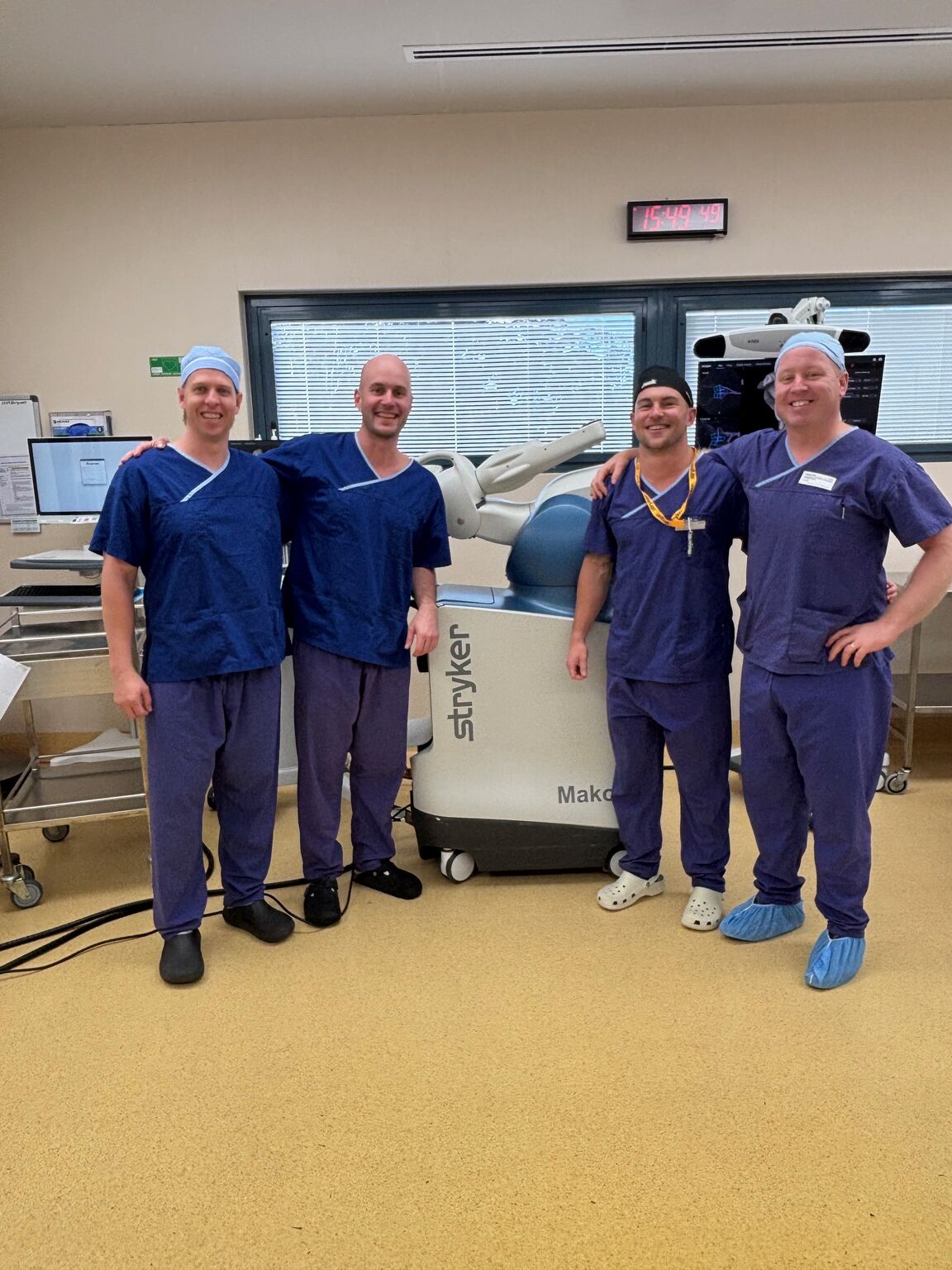
Yesterday, Mr Richard Lloyd flew over from Christchurch and spent the day in theatre with me, watching robotic shoulder replacement. Not a highlights reel. The whole thing: the setup, the planning, the ordinary detail of how a case actually runs.
Visits like this have become a regular part of my practice. Surgeons come to the Sunshine Coast to see robotic shoulder replacement up close, because a steady caseload here means there is nearly always a list worth watching. I used to think of these days as something I provided. I have since learnt they run in both directions, and yesterday was a good example of why.
Being watched changes how you see your own work
Something happens when an experienced colleague stands beside you and watches closely. You start examining steps you had long stopped noticing. Why do I do it this way? Why not that way? The routine parts of a case, the ones that run on habit, suddenly come back into focus.
Richard asked exactly those questions. Why this sequence. Why that release. Some I could answer immediately, and answering out loud sharpened my own understanding of what I was doing and why. A few I could not answer, and those are the ones worth sitting with. A habit you cannot justify is not necessarily a bad habit, but it deserves an audit. Without a visitor in the room, that audit rarely happens.
This is one of the quiet benefits of opening your theatre to colleagues. Every observer is also an examiner, and every examination makes the technique a little more deliberate.
How technique actually moves between surgeons
We tend to imagine surgical knowledge travelling through formal channels: a course, a conference lecture, a figure in a journal. Those matter, but in my experience they are not where technique really moves.
Technique moves when a colleague stands in the room and compares what they are seeing against their own hands. They notice the things a paper never captures: the order of steps, the way the assistant is positioned, the small decisions between the ones that get written down. Then they ask about the differences. That conversation, held over an open wound with both parties fully invested, transfers more than most lecture theatres ever will.
The robot itself is the same in Christchurch as it is on the Sunshine Coast. The software does not change with the postcode. What each of us does with it, the judgement wrapped around the technology, is where the learning lives. That is precisely the part that can only be shared in person.
Volume as an invitation
I have written before about surgical volume as a shared resource. Proctoring a colleague through their first cases is one form of that. Hosting visiting surgeons is another, and in some ways it is the easier invitation to extend: no pressure, no first case nerves, just a day of watching, questioning and comparing notes.
A busy robotic practice generates something beyond outcomes for the patients on the list. It generates a place where the technique can be seen, questioned and improved. Keeping that to yourself would be a waste. Trans-Tasman visits like Richard’s are exactly what that experience is for.
And the exchange is honest in both directions. Richard brought his own experience, his own habits and his own questions, and I am quite sure I learnt as much from him as he did from me. That is not modesty. It is how these days reliably go, and it is the reason I keep saying yes to them.
It was a privilege to host him. I look forward to returning the visit in Christchurch soon, standing on the other side of the table and asking the questions this time.
Dr Joe Coory is an orthopaedic surgeon on the Sunshine Coast with a subspecialty interest in shoulder and upper limb surgery.