
Proctoring Brisbane's First Mako Robotic Shoulder Replacement
The first case is never faced alone. Dr Joe Coory travelled to Greenslopes Private Hospital in Brisbane to proctor Dr Chris Conyard through Brisbane's first Mako robotic total shoulder replacement — and on why surgical experience is a resource to be shared.
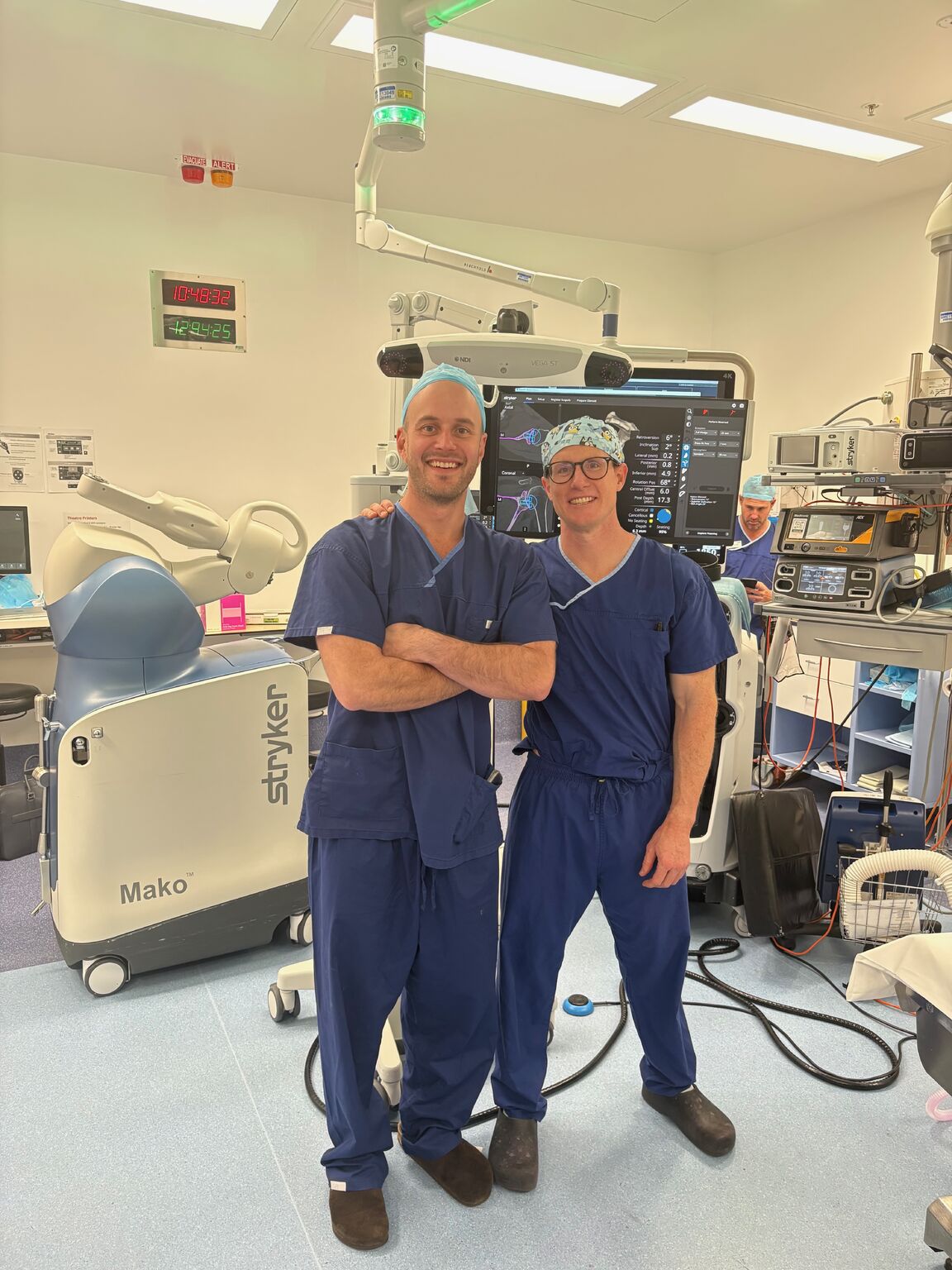
Last week I stood in an operating theatre at Greenslopes Private Hospital in Brisbane and did not operate.
Chris Conyard was performing his first robotic total shoulder replacements on the Mako platform — making Greenslopes the first hospital in Brisbane to offer robotic-assisted total shoulder replacement surgery. I had driven down from the Sunshine Coast to be his proctor: to step in where it was useful, to stay out of the way where it was not, and mostly to watch someone I have known for more than ten years take on something new and do it carefully.
Greenslopes Private Hospital has since written about the milestone: Queensland Robotic Surgery Pioneer Delivers Brisbane First in Robotic Shoulder Replacement.
I wrote a short piece about that day on LinkedIn, mostly about friendship. But there is a bigger idea underneath it that deserves more room, and it is about how surgeons actually learn.
What a proctor actually does
Proctoring is not teaching, exactly. Chris is a fully trained, experienced shoulder surgeon. The skill was already there. What was new was the platform: a different workflow, different instruments, a different choreography for the whole theatre team.
The first cases with any new technology carry a particular kind of weight. Not because the surgeon lacks ability, but because so much of what normally runs on autopilot suddenly requires conscious attention. Every step gets checked twice. That is exactly as it should be, and it is also cognitively expensive.
I cannot transfer my robotic experience into another surgeon's brain. What I can do is absorb some of that load. A proctor is a second set of eyes on the plan, a person who has already met the small surprises and knows which ones matter, and someone standing close enough that the first case is never quite faced alone.
The learning curve is real, so who should carry it?
Every surgical technique has a learning curve. The literature is clear on this, and pretending otherwise helps nobody. The honest question is not whether the curve exists but who carries its weight.
The answer should never be the patient. Our profession has built a set of tools to make sure of that: structured training on the platform, cadaveric and simulation work, careful selection of early cases, and proctoring, where a surgeon further along the curve stands beside a colleague at the start of theirs. None of these removes the curve. Together they flatten it, and they shift its burden away from the operating table and onto the profession, where it belongs.
Volume as a shared resource
Robotic shoulder replacement has been a significant part of my practice on the Sunshine Coast, and case volume accumulates faster than you might expect. Each case adds something small: a pattern recognised earlier, a step refined, a surprise met once so it is not a surprise again.
I have come to think that this kind of accumulated experience is only worth something if it is shared. Volume kept to yourself is a private asset. Volume shared, through fellows, visiting surgeons and proctoring colleagues in other cities, becomes infrastructure for the whole specialty. It shortens other surgeons' learning curves, which means it quietly protects patients a surgeon like me will never meet.
That is why I said yes when Chris asked, and why I would say yes again. The trip to Brisbane was not a favour so much as a repayment. Every surgeon who operates confidently today does so because someone once stood beside them.
What this means if you are a patient
If your surgeon tells you a more experienced colleague will be in the room for a newer procedure, that is not a warning sign. It is one of the strongest indicators of careful practice you can get. Surgeons who invite scrutiny, who train openly and who ask for support at the right moments are showing you exactly the judgement you want at the table.
Chris did not need me last week. That is rather the point. The best time to have someone beside you is the day you need them least and want them most.
Go well, Chris.
Dr Joe Coory is an orthopaedic surgeon on the Sunshine Coast with a subspecialty interest in shoulder and upper limb surgery.